
World Cup 2026 Stadiums — All 16 Venues Rated
 Available in US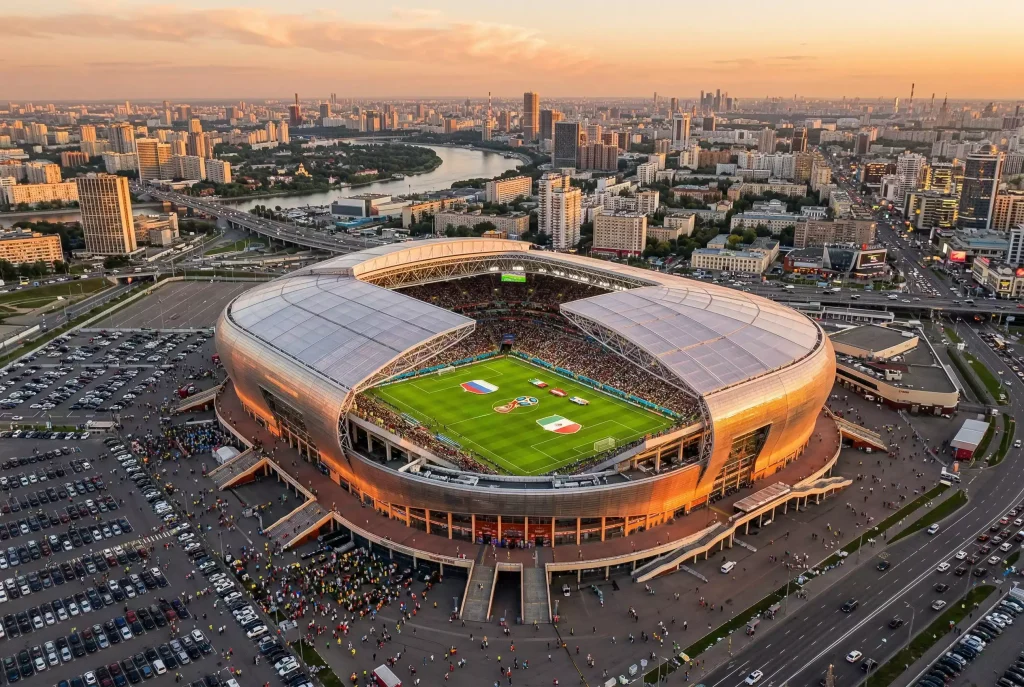
Table of Contents
Three countries, 16 stadiums, and a collective seating capacity that dwarfs anything FIFA has ever assembled for a single tournament. The 2026 World Cup will be played across venues ranging from a $5.5 billion architectural marvel in Los Angeles to a 55,000-seat retractable-roof stadium in Vancouver that the All Whites will call home for two of their three group matches. For a Kiwi punter, the stadiums matter beyond aesthetics — venue conditions, altitude, climate, pitch dimensions, and crowd composition all influence match outcomes in ways the odds do not always capture.
I have visited seven of the 16 World Cup 2026 venues across various sporting events. What follows is my honest assessment of each, rated on three criteria that matter for a football tournament: atmosphere potential, playing conditions, and match significance (which fixtures are assigned there). The ratings are subjective. They are also informed by nine years of watching how venue factors quietly shape World Cup results.
USA Stadiums — the 11 American Venues Ranked
The United States contributes 11 of the 16 host stadiums, and these venues were not built for football. They were built for the NFL, which means vast bowl-shaped structures with capacities exceeding 70,000, synthetic turf that will be replaced with temporary natural grass, and sightlines designed for a sport played on a 100-yard field rather than a 105-metre pitch. FIFA has mandated natural grass overlays for every American venue, but the quality and consistency of temporary pitches has been a recurring concern at recent tournaments — the 2022 Copa America played at several of these same stadiums produced visibly patchy surfaces that affected ball movement.
MetLife Stadium in East Rutherford, New Jersey, hosts the World Cup final and is the tournament’s flagship venue. Capacity sits at approximately 82,500, making it one of the largest stadiums in the competition. MetLife is an open-air stadium with no roof, which means the final on 19 July will be subject to whatever weather the New York metropolitan area delivers — and mid-July in the northeast can mean anything from sweltering heat to sudden thunderstorms. The lack of a roof removes the acoustic containment that makes enclosed stadiums deafening, but the sheer volume of 82,000 fans compensates. My rating: 7/10. A worthy final venue on scale alone, but the open-air exposure and temporary grass surface are genuine concerns for the biggest match on Earth.
SoFi Stadium in Inglewood, Los Angeles, is the venue I am most excited about. This $5.5 billion indoor stadium is the newest and most technologically advanced venue in the tournament, with a translucent roof, a 70,000-seat capacity that can expand for major events, and an atmosphere that the 2022 Super Bowl demonstrated can be electric. SoFi hosts the All Whites’ opening match against Iran on 15 June, which makes it personally significant for every Kiwi fan. The indoor environment eliminates weather as a variable and creates a consistent playing surface. My rating: 9/10. The best venue in the tournament for matchday experience and playing conditions.
Hard Rock Stadium in Miami Gardens, Florida, presents the most challenging climate conditions of any venue. Mid-June temperatures in Miami routinely exceed 32 degrees Celsius with humidity above 70%. Matches scheduled for afternoon kick-offs at Hard Rock will test the fitness and heat tolerance of every team involved. European squads unaccustomed to tropical conditions may suffer more than South American or African teams, which creates a subtle but real edge in match assessment. The stadium itself seats 65,000 and has a partial canopy structure that provides shade for some spectators but does little to reduce pitch-level temperatures. My rating: 6/10. The heat is a factor the bookmaker may underweight.
AT&T Stadium in Arlington, Texas, is the fully enclosed home of the Dallas Cowboys and hosts one of the two semi-finals. Its retractable roof will almost certainly be closed for World Cup matches, creating a climate-controlled environment that neutralises the brutal Texas summer heat. Capacity exceeds 80,000 with standing room, and the stadium’s acoustic design amplifies crowd noise to levels that rival any venue in the tournament. My rating: 8/10. A strong semi-final venue with top-tier conditions.
NRG Stadium in Houston seats approximately 72,000 and features a retractable roof. Houston’s summer humidity is comparable to Miami’s, but the enclosed option makes this a far more comfortable venue. The stadium has hosted major international football events before, including Copa America matches, and the infrastructure is proven. My rating: 7/10.
Mercedes-Benz Stadium in Atlanta hosts the second semi-final and is one of the most visually striking sports venues in the world. Its signature retractable roof — designed to open like a camera aperture — seats 71,000 and creates an enclosed environment with exceptional sightlines. Atlanta’s climate in June and July is hot and humid, but the closed roof negates the impact. My rating: 8/10. Atmosphere potential here is immense.
Lumen Field in Seattle is the home of the Sounders and has a reputation as one of the loudest stadiums in North American sport, thanks to its partially enclosed design and steep upper deck that directs sound back onto the pitch. Seattle’s summer weather is mild — typically 20-25 degrees Celsius — making it one of the most pleasant climates in the tournament. Lumen hosts Group G matches including Belgium vs Egypt, which gives it direct relevance for Kiwi punters tracking the All Whites’ group. Capacity is around 69,000. My rating: 8/10. Underrated venue with excellent conditions.
Levi’s Stadium in Santa Clara, near San Francisco, seats 68,500 and is an open-air venue. The Bay Area’s summer climate is among the mildest in the US — afternoon temperatures rarely exceed 25 degrees Celsius — which creates ideal playing conditions. The stadium’s location in Silicon Valley lends it a modern, tech-forward feel, though the atmosphere at NFL events has been criticised as corporate compared to older stadiums. My rating: 6/10. Good conditions, potentially flat atmosphere.
Lincoln Financial Field in Philadelphia (69,000 capacity), Gillette Stadium in Foxborough near Boston (65,000), and GEHA Field at Arrowhead Stadium in Kansas City (76,000) round out the American venues. All three are open-air NFL stadiums in regions where summer temperatures range from warm to hot. Arrowhead stands out — it is widely regarded as the loudest outdoor stadium in the US, and its capacity and atmosphere make it a strong group-stage venue. My ratings: Lincoln Financial Field 6/10, Gillette Stadium 6/10, Arrowhead 7/10.
Mexico — Three Iconic Grounds
Mexico’s three venues bring something the American stadiums largely lack: football history. These are stadiums built for the sport, with steep stands, close sightlines, and atmospheres that have hosted World Cup finals and continental showpieces for decades.
Estadio Azteca in Mexico City is the cathedral. It has hosted two World Cup finals — 1970 and 1986 — and will host the opening match of the 2026 tournament, Mexico vs South Africa on 11 June. The Azteca sits at 2,240 metres above sea level, which introduces altitude as a genuine playing factor. Teams unaccustomed to altitude fatigue faster, struggle with the thinner air’s effect on ball flight, and often underperform in the first 20-30 minutes before acclimatising. Capacity has been reduced to approximately 83,000 for the World Cup from its original 105,000, and the stadium has undergone extensive renovation. My rating: 9/10. History, atmosphere, and the altitude factor make this a venue that shapes results.
Estadio BBVA in Monterrey is the home of CF Monterrey and seats approximately 53,000. It is the most modern of Mexico’s three venues, opened in 2015, with excellent sightlines and a design that channels sound effectively. Monterrey’s climate in June is hot — temperatures regularly exceed 35 degrees Celsius — and the open-air design means no reprieve. My rating: 7/10. A strong mid-tier venue with punishing heat that will favour teams from warm climates.
Estadio Akron in Guadalajara (Zapopan) seats around 49,000 and hosted matches at the 1970 World Cup under its former identity. The venue has been modernised and offers a compact, intense atmosphere. Guadalajara’s altitude is lower than Mexico City’s at roughly 1,566 metres, but still elevated enough to cause mild fatigue for sea-level teams. My rating: 7/10.
Canada — Two Venues, Big Ambitions
Canada’s two World Cup venues carry enormous significance for New Zealand. BC Place in Vancouver hosts two of the All Whites’ three group matches — against Egypt on 21 June and against Belgium on 26 June. That makes BC Place the closest thing to a home ground that the All Whites will have in North America, and the Kiwi contingent in Vancouver is expected to be the largest New Zealand football fan gathering in history.
BC Place seats approximately 54,500 for football configuration and features a retractable roof that will be closed for World Cup matches. The enclosed environment creates a consistent atmosphere and eliminates Vancouver’s notoriously unpredictable summer weather as a factor. Vancouver’s climate is mild — average June temperatures hover around 18-20 degrees Celsius — which means even if the roof were open, conditions would be comfortable. The stadium’s location in downtown Vancouver, adjacent to the waterfront and accessible by public transit, makes the matchday experience seamless for travelling fans. My rating: 8/10. Excellent conditions, manageable size, and the emotional weight of hosting the All Whites gives this venue a significance that transcends its physical specifications.
BMO Field in Toronto seats approximately 45,500 for World Cup configuration — the smallest venue in the tournament. It is an open-air, football-specific stadium that has hosted MLS matches, Canadian national team fixtures, and the 2015 Pan American Games. Toronto’s June weather is warm and occasionally humid, with temperatures typically between 20 and 28 degrees Celsius. The compact size creates an intimate atmosphere, but the limited capacity means fewer tickets and a smaller revenue footprint, which is why FIFA has allocated primarily group-stage matches to this venue. My rating: 6/10. A solid football ground that lacks the scale of the tournament’s flagship venues.
What Kiwi Fans Need to Know About Travelling
If you are making the trip from New Zealand to watch the All Whites at the 2026 World Cup, your itinerary is defined by three fixtures: Iran in Los Angeles on 15 June, Egypt in Vancouver on 21 June, and Belgium in Vancouver on 26 June. The good news is that two of those three matches are in the same city, which simplifies logistics enormously. The less good news is that the first match requires a flight from Vancouver to Los Angeles (or vice versa), covering roughly 1,750 kilometres.
Los Angeles to Vancouver is a short domestic-style flight — around two and a half hours — and both cities have excellent international connections from Auckland via direct or one-stop routes. The time zone difference between Auckland and the west coast of North America is substantial: NZST is 19 hours ahead of Pacific Daylight Time (PDT) during the northern summer. In practical terms, a 21:00 ET kick-off for the Iran match translates to 13:00 NZST the following day — a comfortable lunchtime viewing slot for fans back home.
Accommodation costs in Los Angeles and Vancouver during World Cup month will be significantly elevated. Early booking is essential — I am talking January or February 2026 at the latest. Vancouver offers more affordable options than LA, particularly if you stay outside the downtown core and use the SkyTrain to reach BC Place. For the LA match, consider staying in areas like Culver City or El Segundo, both close to SoFi Stadium and more affordable than central Hollywood or Santa Monica.
Match tickets are distributed through FIFA’s official ticketing platform, with specific allocations for each participating nation’s supporters. New Zealand Football will manage the All Whites’ fan allocation. Prices vary by category and match stage — group-stage tickets start at roughly $35 USD for the lowest category. Do not buy from unofficial resellers; FIFA’s digital ticketing system makes resale tickets difficult to verify and easy to counterfeit.
Five Stadiums That Will Shape the Tournament
Every World Cup has venues that produce memorable moments and venues that fade into the background. Based on the match allocations, playing conditions, and atmosphere potential, here are the five 2026 World Cup stadiums I believe will have the greatest impact on the tournament’s narrative — and, by extension, on your betting.
SoFi Stadium, Los Angeles — 9/10. The indoor conditions, the matchday experience, and the high-profile fixtures (including an All Whites opener) make this the venue most likely to produce iconic moments. The controlled environment levels the playing field, which paradoxically favours underdogs who might otherwise struggle with external conditions.
Estadio Azteca, Mexico City — 9/10. The altitude factor is a genuine variable that bookmakers systematically underweight. Teams playing their first match at the Azteca — especially European sides accustomed to sea-level conditions — face a measurable performance disadvantage in the first half. Factor this into your match betting for any Azteca fixture.
AT&T Stadium, Arlington — 8/10. A semi-final venue with a fully enclosed environment and 80,000 screaming fans. The enclosed acoustics will create an atmosphere approaching Champions League final intensity. The team that feeds off the crowd will benefit enormously.
BC Place, Vancouver — 8/10. Two All Whites matches, a retractable roof, and the largest Kiwi fan gathering in football history. For New Zealand punters, this is our World Cup 2026 betting epicentre — the venue where the All Whites’ tournament will be defined.
Hard Rock Stadium, Miami — 6/10 overall, but the heat factor bumps its significance to 8/10 for betting purposes. Any afternoon match in Miami’s 32-degree heat with 70% humidity is a leveller. Favourites are more vulnerable when climate becomes a variable, and the odds rarely account for it adequately.
