
BC Place — New Zealand’s World Cup Home in Vancouver
 Available in US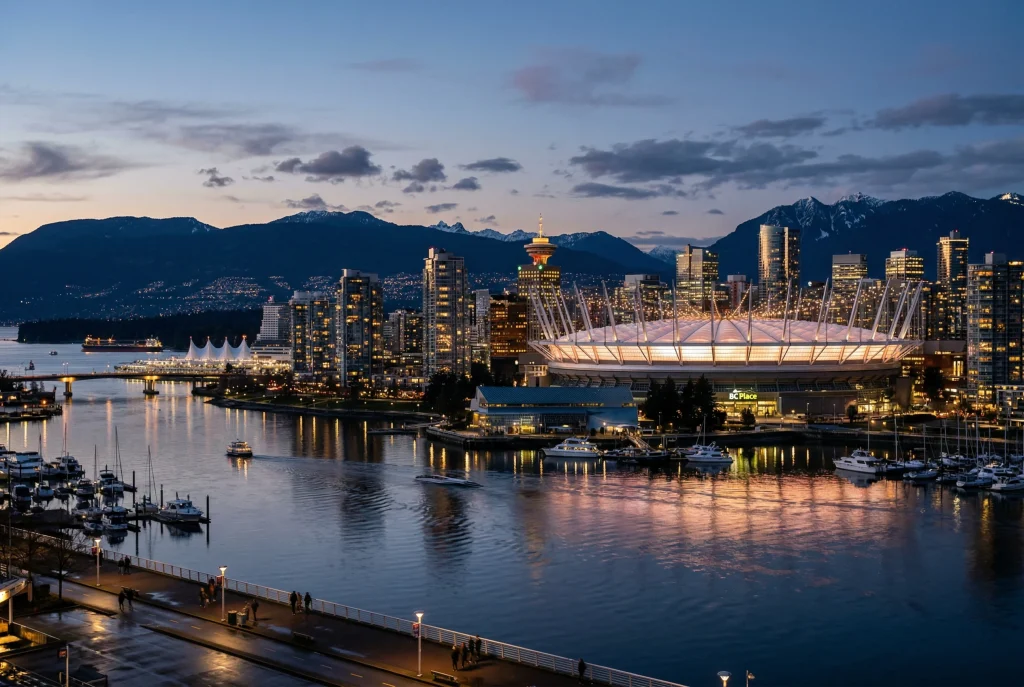
Table of Contents
If there is a city in North America that feels like a home away from home for Kiwis, it is Vancouver. The mountains, the ocean, the relaxed Pacific Northwest lifestyle, and the stunning natural beauty surrounding the city create an environment that New Zealanders recognise instinctively. BC Place stadium, nestled in the heart of downtown Vancouver on the False Creek waterfront, will host two of New Zealand’s three group-stage matches at the 2026 World Cup — and for a team that has never had a “home ground” at a World Cup, BC Place is the closest thing the All Whites will get. Two matches here. Two chances to make history. And a city that will welcome Kiwi fans as warmly as anywhere on the planet.
BC Place — Vancouver’s Versatile Venue
BC Place opened in 1983 and has undergone significant renovation since, most notably the installation of a retractable roof in 2011. That roof is crucial for the World Cup: Vancouver in late June can be warm and sunny, but the Pacific Northwest is also capable of producing rain at any moment, and the retractable cover means that playing conditions at BC Place are controlled regardless of the weather outside. The capacity for World Cup matches will be approximately 54,000 — smaller than SoFi or MetLife, but large enough to generate genuine atmosphere, particularly if a significant portion of the crowd is made up of travelling Kiwi supporters.
The stadium’s downtown location is its greatest asset. BC Place sits on the southern edge of Vancouver’s city centre, within walking distance of restaurants, hotels, bars, and the waterfront promenade. There is no suburban car park experience here — this is a venue you can walk to from your hotel, enjoy a pre-match meal on Granville Street, and stroll back to after the final whistle without ever needing a car. For Kiwi fans accustomed to urban stadium experiences — Wellington’s Sky Stadium sits in a similar relationship to its city centre — BC Place will feel familiar in the best possible way.
The pitch is a significant consideration. BC Place uses an artificial turf surface for its primary tenants — the Vancouver Whitecaps in MLS and the BC Lions in the Canadian Football League — but FIFA’s stadium requirements mandate natural grass for World Cup matches. A temporary natural grass surface will be installed for the tournament, and the quality of that surface after multiple matches in a short timeframe will depend on the maintenance schedule and the weather. The good news is that the retractable roof gives groundskeepers the ability to manage sunlight and moisture, which should produce a more consistent playing surface than some of the open-air venues.
World Cup 2026 Matches at BC Place
The All Whites play twice at BC Place: New Zealand versus Egypt on 21 June at 21:00 ET (13:00 NZST on 22 June), and New Zealand versus Belgium on 26 June at 23:00 ET (15:00 NZST on 27 June). Two matches, six days apart, at the same venue. That continuity is an advantage. The All Whites’ coaching staff will know the pitch, the dimensions, the sightlines, and the acoustics of BC Place before the Belgium match, having already played Egypt there. That familiarity counts at a World Cup, where every marginal advantage can be the difference between a competitive performance and a historic result.
The Egypt match on 22 June is the one that determines whether the All Whites’ World Cup is a story of two halves or a story of three defeats. A result against Egypt — a draw or, dreaming bigger, a win — would set up the Belgium match as a celebration rather than a consolation. The Belgium match on 27 June, regardless of the standings, will be the most-watched football event in New Zealand history. A Friday afternoon kick-off in NZ time means that every office, every school, and every pub in the country will have one eye on the screen. BC Place will be the stage for that moment, and the venue is worthy of it.
BC Place will also host other group-stage matches and potentially knockout-round fixtures, and the Vancouver venue’s reputation during the tournament will be shaped by the quality of football played there. The Canadian co-hosts will want BC Place to rival any US venue for atmosphere, and the local organising committee has been working to ensure that the fan experience — from transport to security to in-stadium entertainment — meets the standard that the World Cup demands.
Vancouver — the Closest Thing to Home
I have been to Vancouver three times, and each visit reinforced the same impression: this city was designed for people who love the outdoors, appreciate good food, and prefer their urban environments green rather than grey. For Kiwi fans making the trip, Vancouver offers a holiday experience that extends well beyond the football. Stanley Park, Granville Island, the Capilano Suspension Bridge, and the ski hills of Whistler (accessible for summer hiking) are all within easy reach, and the city’s restaurant scene — particularly the Japanese and seafood cuisines — is exceptional.
The Kiwi diaspora in Vancouver is substantial, and the existing community will provide a support network for travelling fans. Expect Kiwi-themed gatherings at pubs near BC Place, informal meetups in Stanley Park, and a level of camaraderie among New Zealand supporters that only a World Cup can generate. Vancouver’s multiculturalism also means you will encounter Iranian, Egyptian, and Belgian fans in the city — the group-stage rivals whose supporters will add colour and atmosphere to the pre-match and post-match experience around False Creek and Gastown.
The flight from Auckland to Vancouver is approximately 13 hours direct — long but manageable — and the time zone difference of 19 hours behind NZST means that arriving in Vancouver feels like stepping back in time. Jet lag for westbound travel is generally more manageable than eastbound, and most Kiwi fans should acclimatise within two or three days. Mid-June temperatures in Vancouver average around 18-22 degrees Celsius — mild, pleasant, and a welcome change from the New Zealand winter you will be leaving behind.
For fans following the All Whites across all three group matches, the logistics are straightforward. The first match is at SoFi Stadium in Los Angeles on 15 June. A three-hour flight from LA to Vancouver — available on multiple airlines with frequent departures — gets you to BC Place for the Egypt match on 21 June. The Belgium match on 26 June is at the same venue, meaning you can spend the intervening days exploring Vancouver rather than managing airport logistics. It is the most fan-friendly travel itinerary in the entire tournament.
My BC Place Rating — 8 out of 10
BC Place earns one of my highest venue ratings at the 2026 World Cup, and the reasoning is simple: it offers everything a Kiwi fan could want. A retractable roof for reliable playing conditions. A downtown location for walkable match days. A city that feels familiar to New Zealanders. And two matches — including the biggest in All Whites history against Belgium — that give this venue an emotional weight that no rating system can fully capture. I deduct one point for the capacity — 54,000 is solid but not spectacular by World Cup standards — and one for the artificial-to-natural turf conversion, which introduces a variable that purpose-built football stadiums do not face. But these are minor concerns for a venue that will provide the backdrop to New Zealand’s most significant footballing moments since the 2010 World Cup. If you are going to one World Cup venue as a Kiwi fan, make it BC Place. The city is worth the trip. The football is worth the flight. And the memory of watching the All Whites at a World Cup in a venue that feels like ours is worth everything.
