
USA at the 2026 World Cup — Home Advantage or Home Pressure?
 Available in US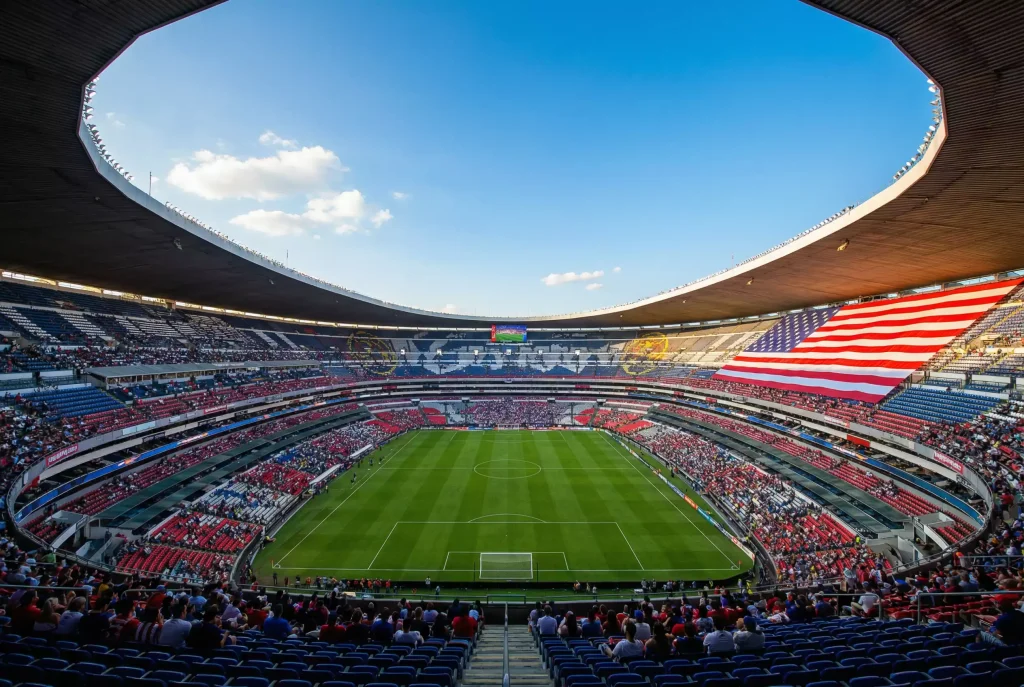
Table of Contents
The last time a host nation failed to qualify from the group stage at a World Cup was South Africa in 2010. Before that, you have to go back to 1966 — but even then, every host since has progressed to at least the Round of 16. The United States in 2026 will carry that expectation into a tournament played across eleven American stadiums, in front of crowds that will be among the largest in World Cup history, with a squad that is the most talented in the history of US soccer. Home advantage at a World Cup is real, measurable and substantial. The question is whether it will be enough, because the squad — while impressive by American standards — has genuine limitations that become visible against the world’s best.
Group D pairs the USMNT with Paraguay, Australia and Turkey. It is a group without a clear favourite, which is both an opportunity and a source of anxiety. Win the group, and the path through the knockout stages could be favourable. Finish second or third, and the home-nation advantage is wasted on a brutally difficult Round of 32 draw. For Kiwi punters, there is a natural curiosity about the hosts — and a trans-Tasman angle, with Australia in the same group — that makes this one of the more interesting betting propositions in the tournament.
Squad Check — MLS Stars and European Exports
The USMNT squad is split between two worlds: the European exports who compete at the highest levels of club football, and the MLS-based players who form the squad’s depth. That split creates an uneven quality profile. The starting eleven is respectable — competitive with most teams at the tournament and capable of beating anyone on a given day. The bench is where the gap appears, with MLS players who lack the intensity and tactical awareness required at World Cup level.
In goal, Matt Turner has established himself as the number one, though competition from Zack Steffen and younger options keeps the position contested. Turner is a capable shot-stopper who has gained European experience at Arsenal and through loan spells, but he is not in the bracket of elite tournament goalkeepers. His distribution is adequate, his command of the box is sometimes uncertain, and he has not yet proven himself in the kind of high-pressure, packed-stadium environment that the 2026 World Cup will produce. Home crowds will help — but home crowds can also amplify errors.
The defence includes several players with genuine European pedigree. Sergiño Dest (if fit after his injury troubles) provides attacking quality from right-back, while Antonee Robinson at Fulham has developed into one of the most dynamic left-backs in the Premier League — his pace, his stamina and his willingness to overlap create width that the USMNT attack needs. At centre-back, Chris Richards and Tim Ream (if still involved at 39) or younger alternatives provide solidity, though the centre-back pairing lacks the individual brilliance of the top sides. The defence is functional rather than commanding — capable of shutting out Paraguay and potentially Australia, but vulnerable against teams with quick, technical attackers who can exploit the spaces behind the full-backs.
Midfield is the area of greatest strength. Weston McKennie at Juventus brings physicality, energy and big-match experience from Serie A. Tyler Adams, if fit, provides the defensive screen — his reading of the game and his ability to intercept passes in dangerous areas are essential to the team’s structure. Yunus Musah adds dynamism, while Gio Reyna (son of former USMNT star Claudio) offers creativity and flair from an advanced midfield position when he can stay healthy. The midfield depth is solid — perhaps the deepest area of the squad — and it is where the USMNT are most competitive with the tournament’s stronger teams.
In attack, Christian Pulisic is the star. The AC Milan winger is the most accomplished American footballer in history, with over 150 Serie A appearances and a Champions League campaign that has tested him against the best defences in Europe. Pulisic’s directness, his ability to drive at defenders and his composure in front of goal make him the player opponents will focus on. Tim Weah, the son of Ballon d’Or winner George Weah, adds pace and unpredictability on the opposite wing. The central striker position is less settled — Josh Sargent, Ricardo Pepi or Folarin Balogun (who chose the USMNT over England and Nigeria) will compete for the starting role. None of them is a proven World Cup-level goalscorer, which limits the team’s ceiling in matches where they dominate possession and need a clinical finisher to convert chances.
Pulisic, McKennie, and the “Golden Generation”
American soccer media has labelled this group the “golden generation,” and while that phrase is overused globally, the label fits. The USMNT have never had this many players competing at top European clubs simultaneously. Pulisic at Milan, McKennie at Juventus, Adams in the Premier League, Robinson at Fulham, Musah at a top-five European league — the depth of European experience is unprecedented in American football history.
Pulisic carries the heaviest burden. He is the team’s most marketable player, their best attacker and the person the American public will look to for moments of inspiration. His performance at Qatar 2022, where he scored the decisive goal against Iran and injured himself in the process, showed his commitment but also his fragility — Pulisic plays with an intensity that leaves him vulnerable to physical breakdown. Managing his workload across a 39-day tournament, in the heat and humidity of a North American summer, will be crucial. If Pulisic stays fit for all seven matches (assuming the USA advance that far), the USMNT have a genuine chance of reaching the quarter-finals. If he is limited to four or five appearances, the attacking quality drops noticeably.
McKennie’s role is different but equally important. He is the squad’s emotional leader on the pitch — the player who demands intensity from those around him, who challenges opponents physically and who fills the gaps that the tactical system leaves exposed. His Juventus experience has taught him how to compete in high-pressure matches where the margins are razor-thin, and that composure transfers to the international stage. McKennie in the USMNT midfield is the foundation on which everything else is built.
Group D — Paraguay, Australia, Turkey
Group D is the tournament’s most open group. There is no clear favourite — the USA, Turkey, Australia and Paraguay are all competitive sides with genuine chances of finishing first. That openness creates volatility, and volatility creates betting value.
Turkey are the most dangerous opponent. A squad that has improved markedly under a new generation of players, Turkey combine European tactical sophistication with the kind of passionate, intense support that can turn neutral venues into home grounds. Hakan Çalhanoğlu at Inter Milan provides midfield quality that rivals anything in Group D, and their defensive organisation under their current coaching setup has been impressive. Turkey’s presence in this group is what prevents it from being a comfortable assignment for the hosts.
Australia — the Socceroos — add a trans-Tasman dimension that Kiwi punters will find irresistible. Both nations from this side of the world, in the same group at a World Cup, competing for knockout-stage places. Australia’s squad is experienced, physically robust and capable of grinding out results through defensive discipline and set-piece proficiency. The USA vs Australia match will be one of the most fascinating fixtures in the group — two nations with something to prove, in front of an American crowd that may not fully appreciate the intensity of the occasion.
Paraguay complete the group with a squad that plays the characteristically South American way — physically aggressive, tactically flexible and exceptionally difficult to beat when they decide to sit deep and defend. Paraguay have a history of overperforming at World Cups relative to their talent level, and their presence ensures that no match in Group D will be straightforward.
My predicted Group D standings: USA first on seven points (home advantage tips the balance), Turkey second on five, Australia third on four, Paraguay fourth on one. But the margins are thin — any of the top three could finish first, and the group could easily produce a result that reshapes the entire knockout-stage bracket.
USA Odds — My Take on the Host Nation Market
The USA are priced at approximately 25.00-35.00 to win the 2026 World Cup outright. Those odds reflect the home-nation premium — the USA would not be priced this short at a neutral venue — and the recognition that home advantage at a World Cup is worth roughly one tier of improvement (a team priced at 50.00 away becomes 25.00 at home). My assessment is that the market is about right. The USA are not going to win the World Cup — the squad depth and individual quality are simply not at that level — but they are genuine contenders to reach the quarter-finals, and in the right bracket, a semi-final is not impossible.
The group-stage markets are more interesting. USA to top Group D is priced at around 2.20-2.60, and I think there is marginal value at the higher end of that range. Home advantage in group-stage matches at a World Cup is a documented phenomenon — the crowd energy, the familiarity with conditions, the absence of jet lag — and it applies to every match the USA play on American soil. The alternative — USA to qualify from the group in any position — is priced at approximately 1.40-1.50, which is fair but not generous.
For Kiwi punters, the most interesting angle is the Australia-related markets. The Socceroos in Group D means there are opportunities to bet on outcomes that have a trans-Tasman narrative — Australia vs USA, Australia to qualify, Australia vs Paraguay — that add engagement beyond pure value. I cover the Socceroos’ prospects in more detail on their dedicated page, but from the USA’s perspective, Australia represent a beatable but not easy opponent whose physical approach could trouble the more technically oriented Americans.
My overall rating for the USA at the 2026 World Cup: 5 out of 10. Home advantage elevates them to a 6 for this specific tournament. The squad is competitive, the coaching setup is adequate, and the crowd support will be enormous. But the ceiling is the quarter-finals unless the bracket falls unusually kindly, and the knockout stages will expose the quality gap between European-based starters and MLS-level depth. Back the USA to qualify from the group. Watch the Australia match with particular interest. And resist the temptation to bet on the hosts going all the way — it would be a great story, but the squad is not ready for that chapter yet.
